Tanker Attacks in the Strait of Hormuz Reach Their Highest Level Since the Iran War Began
Three tankers were struck off Oman in less than fifteen hours last week, maritime data show the busiest months of attacks since February, and the American blockade has squeezed Iran's own oil exports to zero.
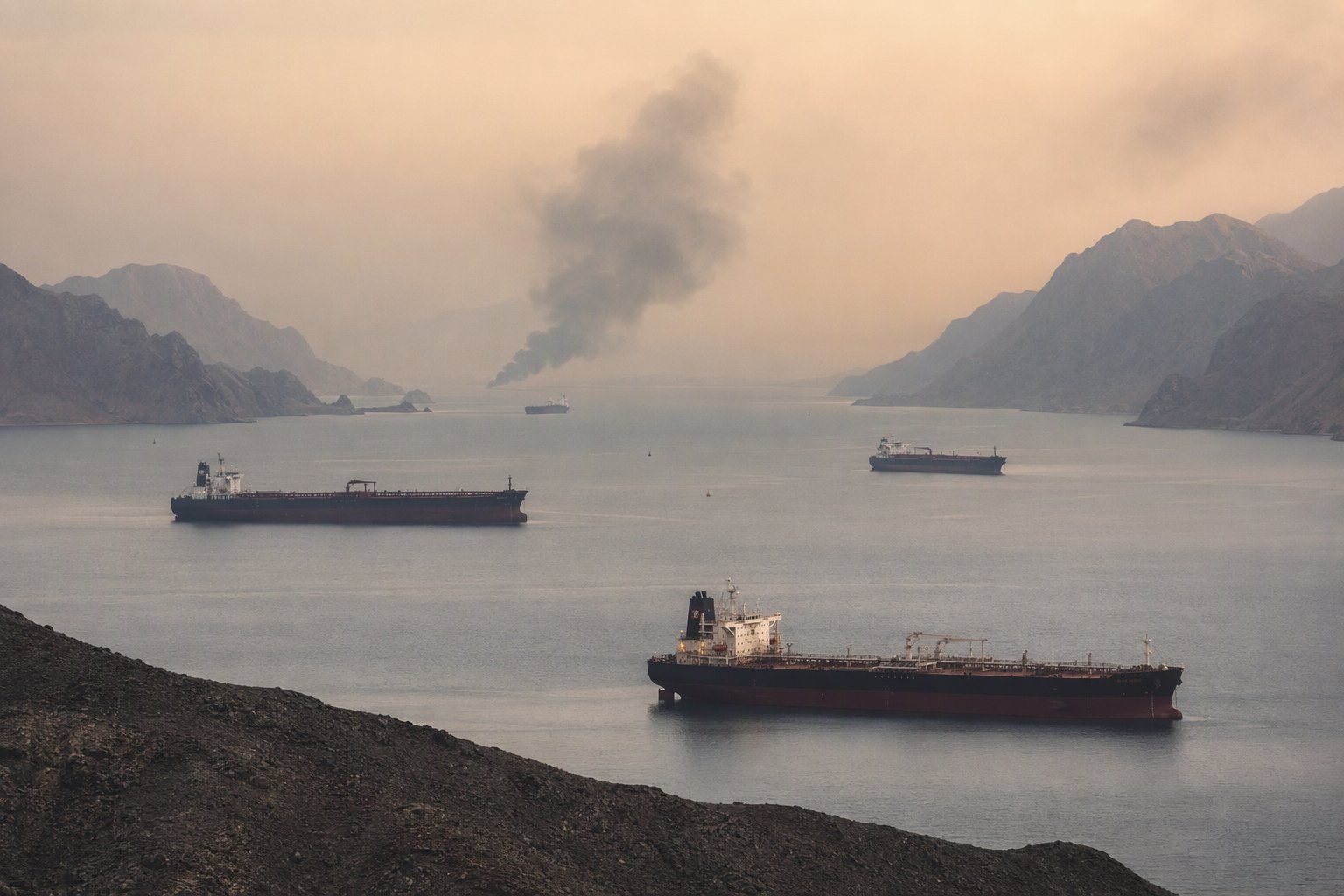
Attacks on commercial shipping in and around the Strait of Hormuz have climbed to their highest level since the war between the United States, Israel and Iran began in late February, maritime security organizations report, with three more tankers struck off Oman in less than fifteen hours on November 20 and 21.
The United Kingdom Maritime Trade Operations Centre recorded 31 attacks in and around the strait in October, the most of any month since the war began, with at least 19 to 22 more so far in November, according to analyses of its data by ABC News and CNN. By comparison, 53 incidents were reported from March through September combined.
The latest strikes hit outbound tankers near Khasab, on Oman's Musandam Peninsula. An unidentified tanker was struck on its port bow on November 20; the tanker Torkel was hit on the stern and the tanker Arina in the engine room a day later. No crew casualties were reported. The Joint Maritime Information Center counts seven tankers struck since November 16 and holds the strait at a "severe" threat level.
Tehran now seems determined to make these arrangements more costly and less reliable.
The maritime center has not attributed the attacks, though the risk firm Marisks assesses Iranian involvement as likely. Iran has claimed that tankers using routes it calls unauthorized have struck naval mines — assertions the information center says are unconfirmed. The trade operations centre has warned the true count is probably higher, as many vessels switch off tracking systems or decline to report.
The escalation runs against a tightening American squeeze. The United States has blockaded Iranian ports since April 13, with a brief summer pause, and the tanker-tracking firm Kpler reports that Iran's oil on the water outside the blockade zone fell to zero in October after its last delivery to China. Kpler estimates Iranian oil revenue could reach zero by mid-December.
Analysts describe a deliberate strategy. Iran is waging "a cycle of adaptation and counter-adaptation" against American workarounds such as ship-to-ship transfers at sea, Sina Toossi of the Center for International Policy told ABC News, aiming to show that normal oil exports cannot continue under the blockade. Hamidreza Azizi of the International Crisis Group said Tehran wants those arrangements "more costly and less reliable."
For now, traffic keeps moving at reduced levels. The Joint Maritime Information Center warns that further attacks on tankers using the Omani side of the strait are highly likely in the next 24 to 48 hours, and that disabled or anchored vessels remain especially exposed. Hundreds of commercial ships are waiting at regional anchorages.