Earth Day Was Born in Wisconsin: Gaylord Nelson's Idea That Circled the Globe
A senator from Clear Lake watched an oil spill, thought of the teach-ins, and set a date: April 22, 1970. Twenty million Americans showed up.
Every April, when a billion people in nearly 200 countries mark Earth Day, they are keeping an appointment first set by a small-town Wisconsinite: Governor and U.S. Senator Gaylord Nelson.
Nelson grew up in Clear Lake, in Polk County, and carried the north woods into every office he held. As governor from 1959 to 1963 he created the Outdoor Recreation Acquisition Program — funded by a penny-a-pack cigarette tax — that bought and preserved more than a million acres of Wisconsin land.
In the Senate, he spent the 1960s searching for a way to force the environment onto the national agenda. After the 1969 Santa Barbara oil spill blackened California beaches, he found his model in the anti-war teach-ins: a national day of campus and community events focused on the planet.
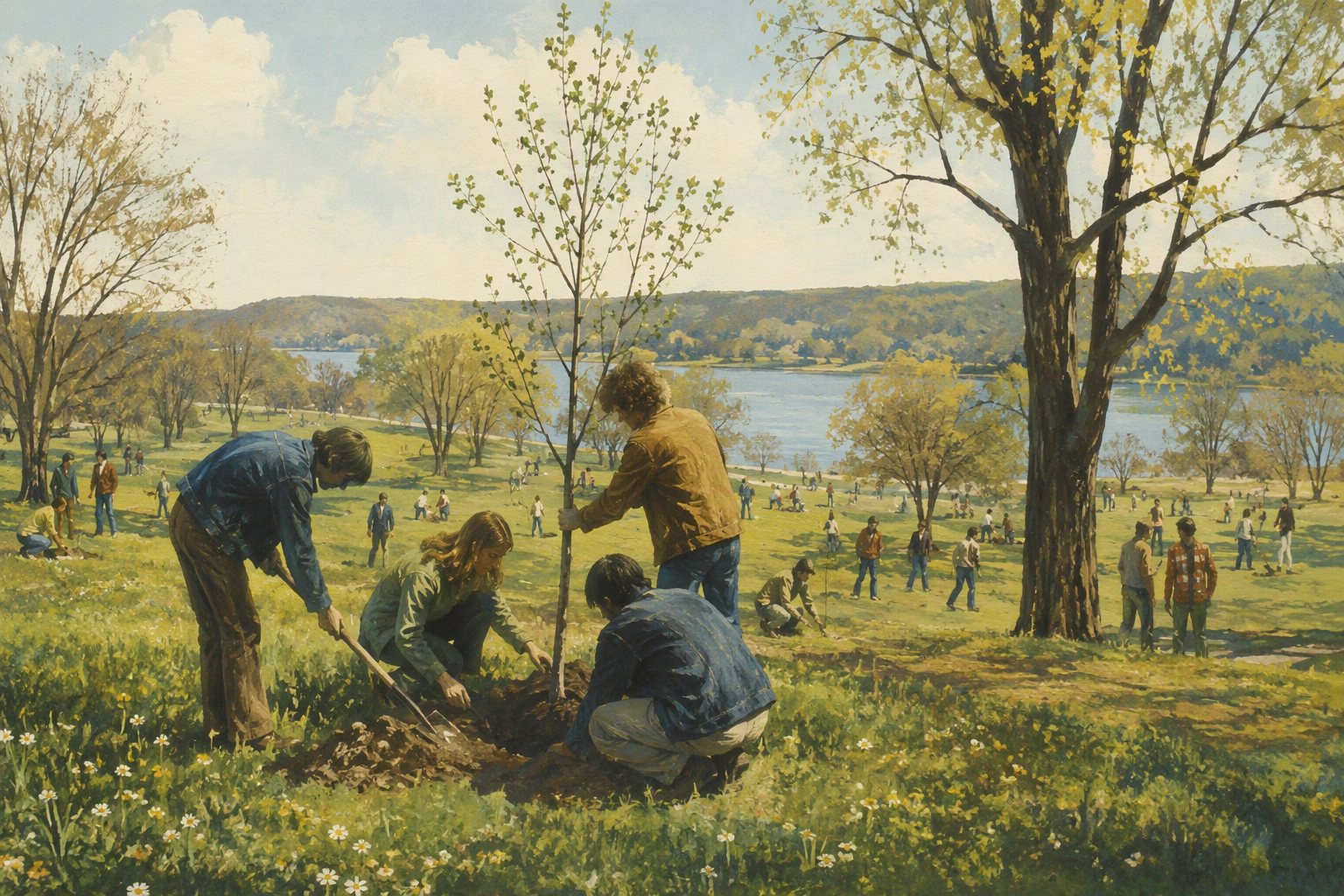
Twenty million Americans — a tenth of the country — answered a Wisconsinite's invitation on April 22, 1970.
April 22, 1970 exceeded every hope. An estimated 20 million Americans — a tenth of the country — took part in rallies, cleanups and teach-ins. Madison held one of the largest events in the Midwest, with crowds marching down State Street.
The political aftershock was enormous. Within a few years Congress had created the Environmental Protection Agency and passed the Clean Air Act, the Clean Water Act and the Endangered Species Act — a legislative avalanche historians credit in large part to Earth Day's demonstration of public will.
Nelson died in 2005, but his state's imprint endures: Earth Day's 55-plus years, the Apostle Islands National Lakeshore he helped protect, and a Wisconsin tradition — from Aldo Leopold to the Ice Age Trail — of treating the land itself as a public trust.