A Four-Hour Ground Stop, 10,000 Delays, and an Air-Traffic System Still Running on Copper
The FAA's Friday ground stop — only the second since 9/11 — was traced to a router installed during a copper-to-fiber upgrade. The disruption is still rippling through Monday's schedules.
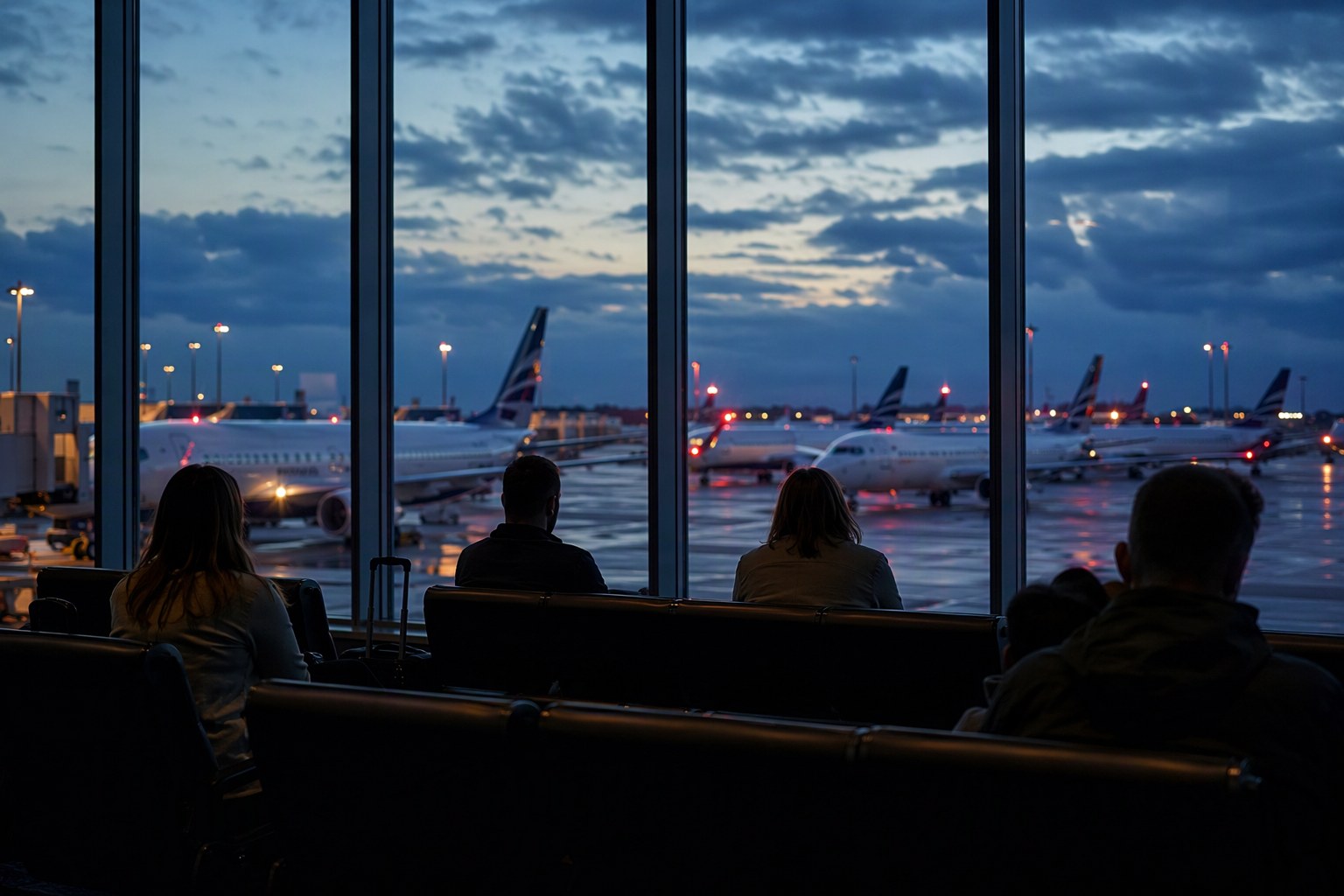
The Federal Aviation Administration's nationwide ground stop on Friday — the second since the September 11 attacks — held nearly 3,500 flights on the ground for about four hours after a routine wire upgrade flooded the air traffic control system's routers, and its aftershocks were still being felt at airports this morning.
The FAA ordered the stop at 3:53 p.m. Eastern on Friday, citing “extraordinary circumstances and … reasons of safety,” and lifted it about four hours later. Planes already airborne continued to their destinations; inbound international flights were handled case by case. The blanket order covered every U.S. airport, from O'Hare to Madison's Dane County Regional.
Transportation Secretary Sean Duffy said the failure began with routine maintenance at a remote FAA facility, where crews were replacing an aging copper wire with a high-speed fiber line. The newly installed router “started flooding other routers in our air traffic control system,” he said — more than 1,000 connection attempts every four to five seconds — disrupting radar feeds and communication with planes.
Either through contractor error or a faulty piece of equipment, it started flooding other routers in our air traffic control system.
“Either through contractor error or a faulty piece of equipment,” Duffy told reporters, the upgrade went wrong; he did not rule out a misconfigured router or mistakes by contractor L3Harris. Homeland Security Secretary Markwayne Mullin said there was no indication of a cyberattack. The root cause remains under investigation.
The scale was enormous. Nearly 3,500 scheduled departures were held, according to accounts of the outage, while FlightAware counted more than 10,000 delays and thousands of cancellations; the Associated Press put the number of disrupted passengers around 1.5 million. NPR reported Monday morning that the ground stop was still affecting thousands of flights as airlines untangled crews and aircraft.
The timing was almost too tidy. That same morning, Reuters had reported the White House pressing Congress for an additional $30.1 billion for aviation infrastructure and air traffic control modernization — a system so old it still relies on copper wire and, in places, floppy disks. AFP noted that Saturday's funding appeal was itself delayed by audio problems.
For travelers, the practical advice is the weary usual: check your flight before leaving for the airport. For Congress, the stop arrives as an unusually vivid exhibit in the middle of a funding fight — and ten days before the Thanksgiving travel rush.